How to Compare Granny Flat Quotes Without Missing Costs
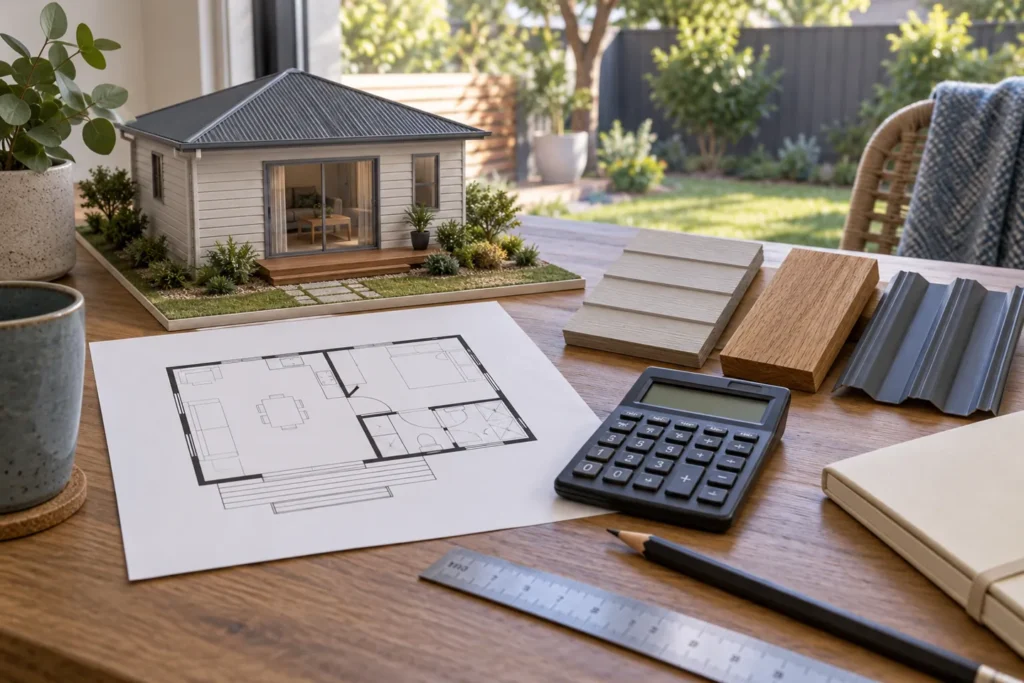
Compare a granny flat quote by pricing the same finished project, including work left outside the builder’s offer. Two totals aren’t comparable if one includes site preparation and connections while the other stops at the building. Start with the inclusions, exclusions and assumptions; the headline price comes after that.
Give each builder the same brief
Send the same proposed floor area, room requirements, preferred build method and known site information to every builder. Include the address, access photographs and any survey or reports you already have. Explain who the flat is for and any practical requirements such as step-free access. Ask builders to identify information they still need instead of silently pricing different assumptions.
Consumer Affairs Victoria recommends getting quotes from builders and checking what the quoted price includes. Keep the comparison within your state’s requirements. A quote based on a standard design before a site inspection belongs in a different column from an offer prepared using your survey and engineering information.
Make a one-page scope comparison
Use one row for each job and one column per builder. Mark each entry “included”, “excluded”, “allowance” or “not stated”. Keep the last category visible: an unanswered question isn’t an inclusion. Ask for the relevant page or clause when a salesperson says something is covered, so the written documents agree with the conversation.
| Item to compare | Question to resolve |
|---|---|
| Design and approvals | Which drawings, reports, applications and fees are included? |
| Site preparation | What access, excavation, demolition and soil assumptions were used? |
| Services | Where do the priced water, sewer, power and communications connections end? |
| Finished rooms | Which fixtures, appliances, finishes and installation work are specified? |
| Outside the building | Who pays for paths, drainage, landscaping, fencing and reinstatement? |
Separate allowances from confirmed prices
Highlight every allowance and ask how it was calculated. If a fixture hasn’t been selected, record what amount has been allowed and whether installation is included. If the site work is uncertain, ask what investigation would reduce that uncertainty. You need to know which figures could change before treating a total as your final budget.
In NSW, the government’s building-contract guidance explains the importance of the written contract and its terms. Use the relevant consumer regulator for your state when reviewing an agreement. Don’t turn an indicative quote into a claim that your project is “fixed price” without checking its exclusions, adjustment clauses and unresolved work.
Add the work you’ll have to arrange yourself
Create a separate owner-cost list beside each quote. An exclusion can be reasonable, but somebody still has to organise and pay for the work. Ask who coordinates the different trades and what must be completed before the builder can start or hand over. A cheap package becomes difficult to compare when you haven’t priced those responsibilities.
For example, imagine two hypothetical offers of $180,000 and $190,000. If the first leaves $18,000 of necessary, separately quoted work to you and the second includes it, the apparent $10,000 saving reverses. Those numbers demonstrate the comparison method; they aren’t current Australian build prices. Use our cost calculator for early planning, then replace estimates with written project-specific figures.
Resolve the questions before choosing a builder
Put the gaps in writing. If a builder says the quote includes the trench from the main house, the electrical connection and reinstating the path, ask them to identify where that work appears in the offer and record any clarification against the correct version. Then check the expiry date, proposed timing, payment terms and process for changes. Keep the replies.
Also check the contracting entity and appropriate licence rather than relying on a trading name or a favourable review. Our builder-licence guide is a starting point; use the applicable state register for the actual check. If the scope or contract remains unclear, get independent advice before committing. A precise answer to an awkward question is more useful than another brochure showing the same kitchen.
Frequently Asked Questions
Is the cheapest granny flat quote the best value?
It may be, but only after you compare the same scope and add excluded work. An unresolved allowance can change the result.
Does “turnkey” mean everything is included?
Ask for the written inclusions and exclusions. The label alone doesn’t tell you whether site work, connections or external finishes are covered.
Can I compare quotes before choosing a design?
You can compare indicative options, but label them that way. Use a consistent brief and record the assumptions that must be confirmed before contracting.
By The Granny Flat Guide Team. Last updated 2 October 2026. About our guides.
How much does council approval add to your build budget?
Council and certifier fees sit outside the builder quote. In NSW, a CDC pathway through a private certifier often lands between roughly $3,000 and $8,000 once survey, BASIX and Sydney Water checks are included, while a full DA can cost more because of longer consultant time and holding costs. Victoria and Queensland use different fee schedules, so treat any single number as a starting point. Model your own project in our cost calculator, then browse the supplier hub or send us an enquiry when your footprint is settled.
What design choices affect approval speed?
Setbacks, height, floor area and tree protection overlays decide whether you stay on a fast CDC track or drop to a slower DA. Staying under common 60 sqm internal caps, keeping adequate side and rear setbacks and connecting services without major easement conflicts usually keeps the pathway simpler. If your block is sloped, flood-affected or heritage-listed, expect extra reports before council or your certifier can sign off. Use the setback checker and approval wizard against your address before you pay for custom drawings.
Primary sources
These cards are an editorial summary of official pages. The Granny Flat Guide is not a certifier, council or licensed builder. Check the live official URL before you lodge or sign.
- Your Home (Australian Government)Your Home: Australia's guide to environmentally sustainable homes
- Australian Building Codes BoardNational Construction Code
- NSW Planning PortalState Environmental Planning Policy (Housing) 2021
- Victorian Building AuthorityBuilding Act 1993 / small second dwelling settings
- Queensland PlanningPlanning Act 2016
- WA Planning (DPLH)Planning and Development Act 2005
- PlanSA (South Australia)Planning, Development and Infrastructure Act 2016
- QBCC (Queensland)Queensland Building and Construction Commission licensing
See our editorial standards for how we research and update guides.
Related guides