Flat Pack Granny Flats at Bunnings: Check the Exact Product
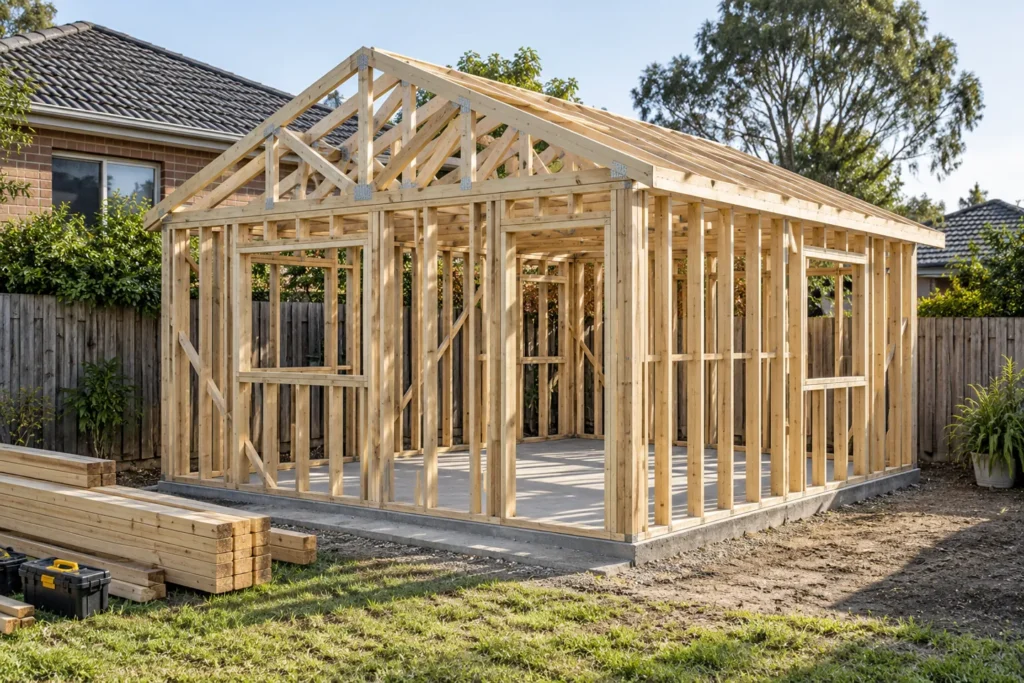
Searching for Bunnings granny flats brings up studios and outdoor structures that need product-specific checks. In Australia, a retail listing doesn’t establish permission to use a building as a self-contained dwelling. Check the exact model, inclusions and intended use before ordering.
Our earlier blanket statement that all Bunnings cabins were Class 10a and could not become habitable accommodation was too broad. The practical decision is product-specific: what is supplied, what use is proposed and what can be approved on your land?
A current Bunnings example
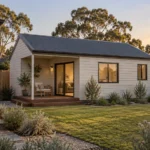
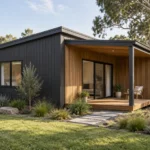
On 3 October 2026, Bunnings listed the Quick Built 5.4m × 3.6m Studio Incl Patio, item 0370126, as a special-order outdoor structure for $25,345. The listing described insulated wall and roof panels and kerbside delivery. Confirm the current offer and delivery charge for your postcode.
The same page tells buyers to check planning or building permits where habitable use is intended. It does not establish approval for an independent dwelling on your property. Nor does the listed price establish the cost of foundations, services, residential fit-out or all work needed before occupation.
This is one dated catalogue example, not a recommendation or a complete survey of the retailer’s range. Read the model’s documents rather than relying on a search-result headline about “tiny homes”.
Distinguish a habitable room from a separate dwelling
A room used as an office, a sleepout associated with a house and a self-contained dwelling can raise different classification and planning questions. The ABCB classification guidance is a starting resource for the responsible practitioner.
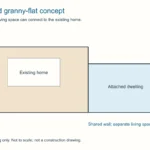
Describe the actual intended use, including cooking, bathing and sleeping facilities and whether another household will occupy the building. A label such as studio, cabin or retreat cannot settle that assessment. Don’t add facilities later on the assumption that approval for the original structure covers the new use.
For the broader distinction, read what counts as a granny flat. Keep the proposed use consistent across the supplier brief and approval documents.
Ask for the documents before paying
| Document or detail | Question it should answer |
|---|---|
| Current inclusions | Which components arrive, and which work remains with the buyer? |
| Engineering scope | What site conditions are covered and what additional design is needed? |
| Proposed classification | What use is the product designed to support, subject to the approval process? |
| Energy and weatherproofing details | How will the proposed installation demonstrate the requirements that apply? |
| Delivery terms | Where is the load placed, who unloads it and how will materials reach the backyard? |
Give the documents to the practitioner assessing your project. Ask them to identify missing information before you order. A sales assurance that a product is “compliant” needs a defined scope and conditions.
Compare the total installed scope
Build a budget around the intended finished space. Include design and approvals, foundations, access, delivery, assembly, services and fit-out. Record which items have quotes and which remain allowances. A lower catalogue price can simply mean that more work sits outside the package.
If a self-contained dwelling is the goal, compare that completed scope with a dwelling kit or builder-managed proposal. Our kit supplier directory is a shortlist for enquiries, not proof that a listed company can approve your property. The quote comparison guide helps reconcile the inclusions.
Also price any changes needed to adapt the selected product. Don’t assume a conversion is impossible, but don’t assume it is economical either. Obtain the design advice and actual quotes before deciding.
Frequently Asked Questions
Can I live in a Bunnings cabin?
That depends on the product, proposed use, installation and required approvals. Obtain written advice for the exact model and address.
Does the advertised price include a completed granny flat?
Read the inclusions. The dated studio example above is not evidence of a complete dwelling price on your site.
Does a small size mean no approval?
No such conclusion follows from size alone. Ask which planning and building requirements apply to the proposed use and property.
By The Granny Flat Guide Team. Last updated October 2026. About our research · Project budget calculator
How much does council approval add to your build budget?
Council and certifier fees sit outside the builder quote. In NSW, a CDC pathway through a private certifier often lands between roughly $3,000 and $8,000 once survey, BASIX and Sydney Water checks are included, while a full DA can cost more because of longer consultant time and holding costs. Victoria and Queensland use different fee schedules, so treat any single number as a starting point. Model your own project in our cost calculator, then browse the supplier hub or send us an enquiry when your footprint is settled.
What design choices affect approval speed?
Setbacks, height, floor area and tree protection overlays decide whether you stay on a fast CDC track or drop to a slower DA. Staying under common 60 sqm internal caps, keeping adequate side and rear setbacks and connecting services without major easement conflicts usually keeps the pathway simpler. If your block is sloped, flood-affected or heritage-listed, expect extra reports before council or your certifier can sign off. Use the setback checker and approval wizard against your address before you pay for custom drawings.
Primary sources
These cards are an editorial summary of official pages. The Granny Flat Guide is not a certifier, council or licensed builder. Check the live official URL before you lodge or sign.
- Your Home (Australian Government)Your Home: Australia's guide to environmentally sustainable homes
- Australian Building Codes BoardNational Construction Code
- NSW Planning PortalState Environmental Planning Policy (Housing) 2021
- Victorian Building AuthorityBuilding Act 1993 / small second dwelling settings
- Queensland PlanningPlanning Act 2016
- WA Planning (DPLH)Planning and Development Act 2005
- PlanSA (South Australia)Planning, Development and Infrastructure Act 2016
- QBCC (Queensland)Queensland Building and Construction Commission licensing
See our editorial standards for how we research and update guides.