Granny Flat vs Studio Apartment Rental Which Investment Fits 2026
A granny flat vs studio apartment rental comparison needs two complete investment budgets. Compare the capital committed, expected net cash flow, risks and eventual sale options. Dividing rent by a granny flat’s construction cost and comparing it with rent divided by an apartment’s purchase price leaves out important differences.
This is a framework for collecting evidence, not a recommendation to buy or build. Get property-specific advice from the relevant finance, tax and legal advisers before committing.
Define the assets you are comparing
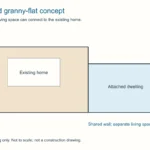
A granny flat normally forms part of the property on which it is built. A separately titled studio apartment is a different asset that may be bought and sold independently. Check the actual title and development arrangements rather than assuming every compact dwelling has the same resale options.
If you already own the backyard, that does not make its use economically cost-free. Consider the effect on your own outdoor space, privacy and future use of the whole property. With an apartment, assess the location and building as well as the interior of the unit.
ASIC’s MoneySmart property investment guidance explains costs and risks to consider. Use it alongside local evidence, not as a substitute for investigating either property.
Build comparable capital budgets
| Budget item | Granny flat proposal | Studio apartment purchase |
|---|---|---|
| Initial commitment | Complete construction scope, professional fees, approvals and site work | Purchase price, transaction costs and any immediate work |
| Finance | Lender assessment of the existing property and proposed work | Lender assessment of the unit, title and borrower |
| Unresolved costs | Provisional construction and connection amounts | Due-diligence findings, repairs and relevant strata liabilities |
| Time before rent | Approval, construction and lawful occupation | Settlement, preparation and tenant placement |
Request the actual fees and quotes for each option. Don’t declare the granny flat cheaper from the shell price or assume a studio purchase needs no further work. Our construction cost breakdown helps identify exclusions on the building side.
Use local rental evidence and net cash flow
Ask a local property manager for comparable lawful rentals and an explanation of differences in size, access, outdoor space, parking and location. Record the appraisal date and assumptions. A national weekly-rent range cannot establish what either property will earn.
Model vacant periods and the expenses you expect to pay, including management, maintenance, insurance and relevant property charges. Add finance costs separately and have tax treatment assessed for your circumstances. Gross rent is not take-home cash.
For an arithmetic comparison, use the same time period and clearly state the denominator in any yield calculation. Then test a lower rent, a longer vacancy or an unexpected repair. These scenarios expose sensitivity; they are not forecasts of what will happen.
Investigate ongoing obligations before purchase or construction
For an apartment, review the strata records, budgets, building condition and any known works with appropriate advisers. Understand which costs are shared and which remain your responsibility. Don’t assume a levy amount guarantees that future work is fully funded.
For a granny flat, obtain advice on insurance for both dwellings and the intended occupancy. Plan how maintenance access, utilities, bins and shared areas will work with another household on the property. Use our insurance guide to prepare questions for an insurer or broker.
Ask a tax adviser to compare the actual ownership, borrowing and rental arrangements. A deduction is not automatic because a building is new, and a dwelling on your home property can raise different questions from a separate investment purchase.
Test the exit and family-use plans
If you may need to sell one asset while keeping your home, establish what can legally be sold separately. Our subdivision guide explains why a second dwelling does not automatically create another title.
If family use is likely, discuss that arrangement before building. Changes from rental to private use can affect insurance, tax and household plans. An apartment can offer a separate location; a backyard dwelling can offer proximity. Neither arrangement is inherently right for every family.
Keep the final decision tied to verified property information and your circumstances. The property-value guide distinguishes construction expenditure from the value a buyer or valuer may recognise.
Frequently Asked Questions
Which has a higher rental yield?
There is no supported national winner here. Compare local rent evidence, complete costs and the same calculation basis.
Will a granny flat recover its build cost at sale?
That is not guaranteed. Obtain advice on the whole property’s likely value and local demand.
Is a studio easy to sell?
Separate title allows a different sale option, but does not guarantee liquidity, buyer demand or a sale price.
By The Granny Flat Guide Team. Last updated October 2026. About our research · Project budget calculator
How much does council approval add to your build budget?
Council and certifier fees sit outside the builder quote. In NSW, a CDC pathway through a private certifier often lands between roughly $3,000 and $8,000 once survey, BASIX and Sydney Water checks are included, while a full DA can cost more because of longer consultant time and holding costs. Victoria and Queensland use different fee schedules, so treat any single number as a starting point. Model your own project in our cost calculator, then browse the supplier hub or send us an enquiry when your footprint is settled.
What design choices affect approval speed?
Setbacks, height, floor area and tree protection overlays decide whether you stay on a fast CDC track or drop to a slower DA. Staying under common 60 sqm internal caps, keeping adequate side and rear setbacks and connecting services without major easement conflicts usually keeps the pathway simpler. If your block is sloped, flood-affected or heritage-listed, expect extra reports before council or your certifier can sign off. Use the setback checker and approval wizard against your address before you pay for custom drawings.
Primary sources
These cards are an editorial summary of official pages. The Granny Flat Guide is not a certifier, council or licensed builder. Check the live official URL before you lodge or sign.
- Your Home (Australian Government)Your Home: Australia's guide to environmentally sustainable homes
- Australian Building Codes BoardNational Construction Code
- NSW Planning PortalState Environmental Planning Policy (Housing) 2021
- Victorian Building AuthorityBuilding Act 1993 / small second dwelling settings
- Queensland PlanningPlanning Act 2016
- WA Planning (DPLH)Planning and Development Act 2005
- PlanSA (South Australia)Planning, Development and Infrastructure Act 2016
- QBCC (Queensland)Queensland Building and Construction Commission licensing
See our editorial standards for how we research and update guides.
Related guides