NSW Granny Flat Cost Guide 2026: Fees, Build and Hidden Charges
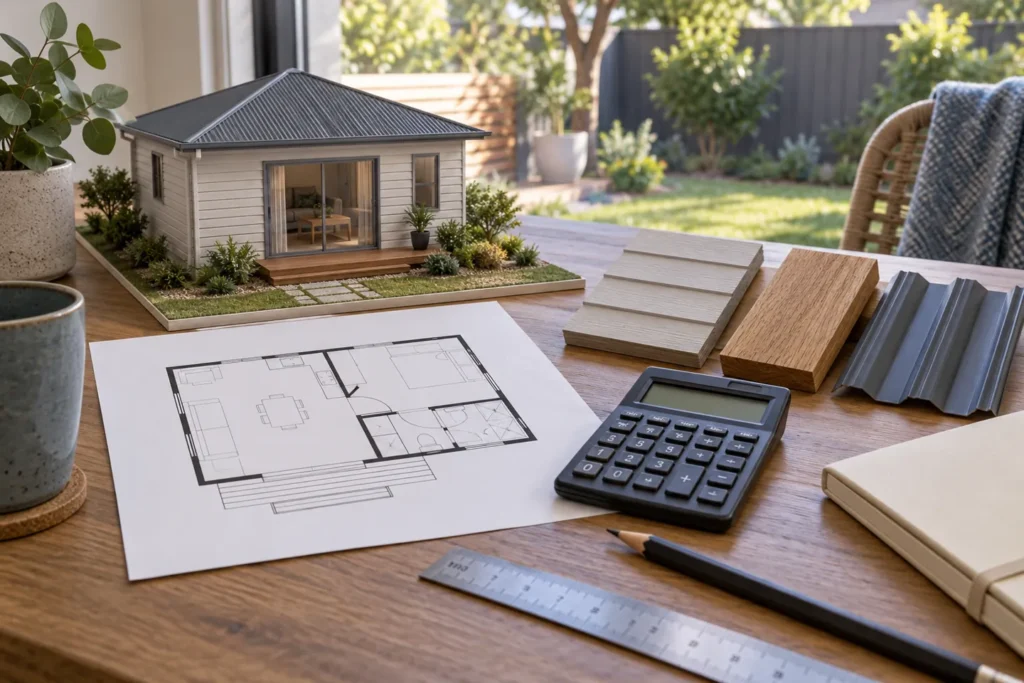
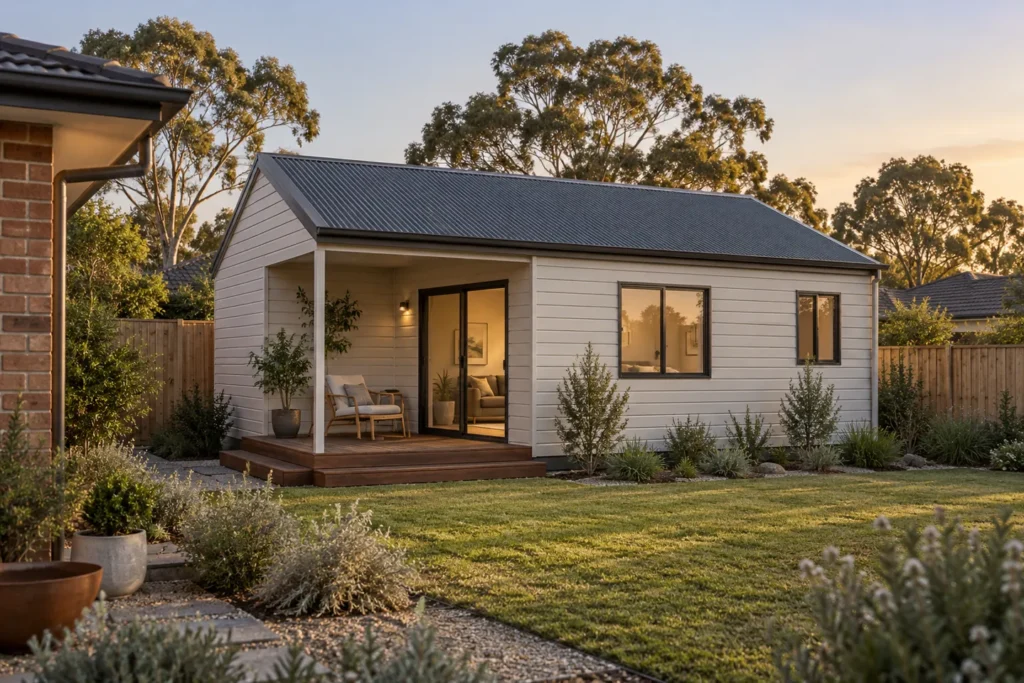
NSW granny flat cost depends on the complete building scope, property constraints and authority charges. We have removed unsupported Sydney and regional price bands. Obtain equivalent site-specific quotes before comparing build methods.
Pair this with NSW CDC vs DA rules and the national cost overview. Official fee schedules live on the NSW Planning Portal.
Turnkey build cost bands (NSW 2026)
| Build type | Price basis |
|---|---|
| DIY kit + owner-managed trades | Obtain a quote for the stated scope |
| Prefab / modular turnkey | Obtain a quote for the stated scope |
| Custom builder | Obtain a quote for the stated scope |
The table identifies different contract scopes, not measured market prices. Ask each supplier to identify the drawings, site assumptions and exclusions used for its quote.
Keep provisional amounts separate from fixed prices. Price access, foundations and services before assuming that a low materials price will produce a lower completed cost.
Approval and council fees
A certifier quote should identify its services and the reports or application charges billed separately. Ask whether survey, engineering and BASIX work are included. Check the NSW approval stages and the applicable fee schedules for the actual proposal.
Add dedicated guides for the line items people forget:
If your LGA sits in a growth corridor, contributions alone can rival the kitchen budget. Don’t leave that as a “we’ll check later” item.
Site costs that blow budgets
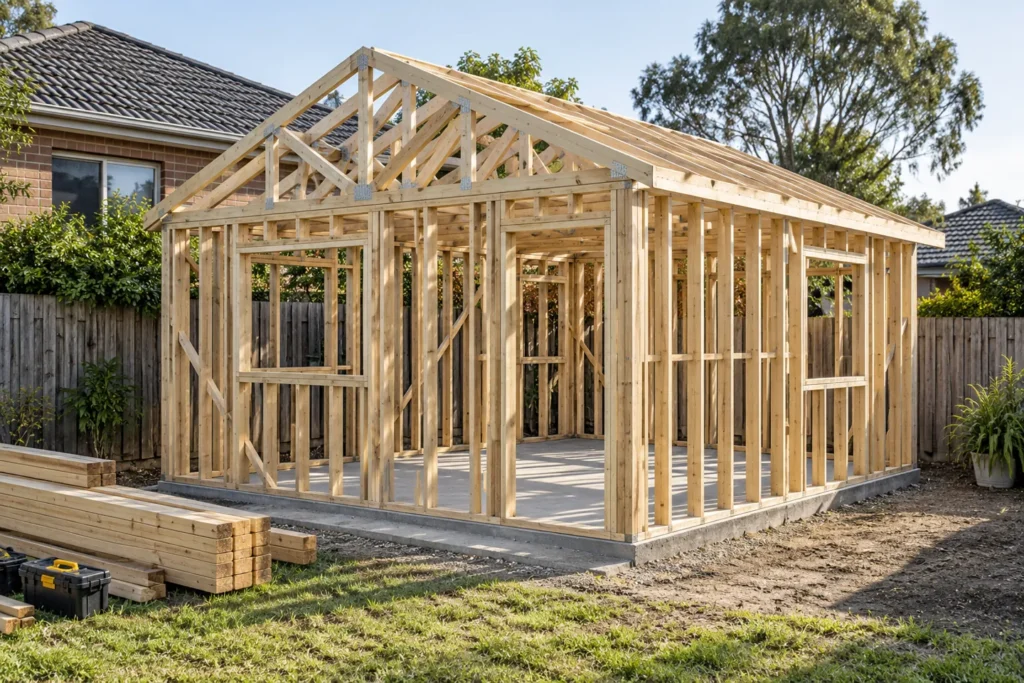
Identify who prices and arranges foundations, drainage, service connections and any work near existing assets. Obtain the relevant water authority’s requirements for the property before treating a general building allowance as complete.
So model preliminaries in our granny flat cost calculator before you sign. Site costs are where NSW granny flat budgets actually blow, not the kitchen splashback.
How to compare three quotes fairly
Map every quote to the same categories: approvals, slab, services, structure, fit-out, externals, contingency. Our national cost breakdown is the checklist. If one quote hides “preliminaries” as a lump, ask them to split it.
Then ask who owns the risk if sewer depth is wrong. Builders who absorb unknown site costs price that risk into the number. Builders who don’t will look cheaper until dig day. Don’t pick the cheapest line if the exclusions page is longer than the inclusions.
Frequently Asked Questions
Is CDC cheaper than DA in NSW?
The appropriate pathway depends on eligibility, not just price. Compare the actual reports, certification scope and authority charges for the proposal.
What’s the cheapest way to build in NSW?
Compare completed scopes across suppliers. Owner-building changes who coordinates the work and carries the risk; it does not guarantee the lowest cost.
Do regional NSW builds always cost less?
No. Freight, trade availability, site work and authority requirements can outweigh any difference in headline building prices.
By The Granny Flat Guide Team
Primary sources
These cards are an editorial summary of official pages. The Granny Flat Guide is not a certifier, council or licensed builder. Check the live official URL before you lodge or sign.
- Your Home (Australian Government)Your Home: Australia's guide to environmentally sustainable homes
- Australian Building Codes BoardNational Construction Code
- NSW Planning PortalState Environmental Planning Policy (Housing) 2021
See our editorial standards for how we research and update guides.