Secondary Dwelling Reforms: Why State Rules Cannot Be Swapped
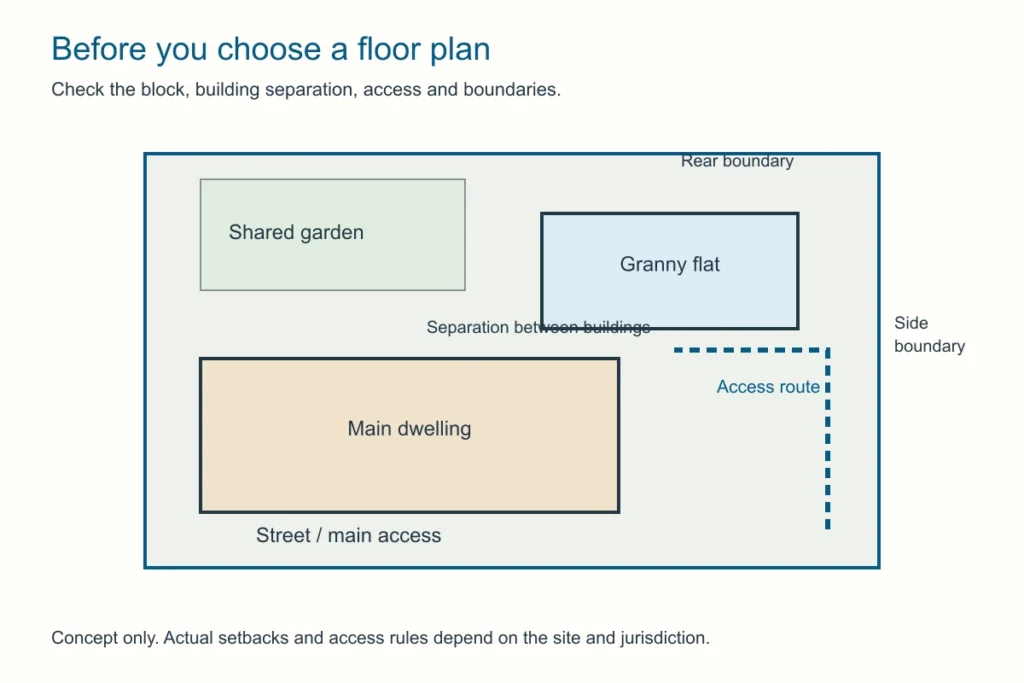
Secondary dwelling reforms across Australia are proceeding through different state frameworks, not one national granny flat rule. Updated 3 October 2026. Tasmania’s draft amendment is an example of why a proposal must be distinguished from provisions already operating elsewhere.
This updates our July comparison. We have removed the unsupported ranking of NSW as the “most flexible” state and the blanket suggestion that a NSW DA permits a 120m² secondary dwelling. Feasibility needs the applicable provisions for the property.
Tasmania’s proposal remains a separate assessment
The Commission’s draft-amendment record concerns proposed changes to secondary residences, including a larger floor-area allowance. At our October check, the record had no published decision in its decision section.
Industry support and a completed exhibition period do not establish that new provisions are operative. Follow the assessment and any commencement information before using a proposed allowance in a building brief.
Our Tasmania guide separates the proposal from the questions to ask about an individual site.
NSW and Victoria use different approval structures
NSW’s secondary dwelling guidance explains complying-development and development-application pathways. A design that fails a CDC standard does not automatically qualify for consent through a DA; permissibility and the applicable controls still matter.
Victoria’s small second dwelling guidance describes planning-permit exemptions subject to conditions and the continuing building-permit requirement. Don’t translate a Victorian exemption into a NSW CDC approval or transfer a floor-area measurement between the two systems.
Ask the practitioner to name the route and documents required for the address. The useful comparison is what each actual project needs, not which state appears to have the shortest checklist.
How to read a reform announcement
Identify who published it, whether it describes a proposal or operative change, and what commencement or transition arrangements it names. Then find the underlying instrument or assessment record. A press release may explain the policy purpose without resolving every property condition.
Keep the source date with your notes. If a supplier uses an older summary, ask which current provisions support its proposed design. Distinguish planning controls from building requirements and from tenancy or subdivision rules; changes to one do not automatically change the others.
For an owner comparing land in two states, prepare a separate assessment brief for each property. Use the state rules guide to locate the framework and the news hub for dated announcements. Neither replaces the property-specific assessment needed before construction commitments.
By The Granny Flat Guide Team. Last updated October 2026. About our research · Project budget calculator
Primary sources
These cards are an editorial summary of official pages. The Granny Flat Guide is not a certifier, council or licensed builder. Check the live official URL before you lodge or sign.
- Your Home (Australian Government)Your Home: Australia's guide to environmentally sustainable homes
- Australian Building Codes BoardNational Construction Code
- Victorian Building AuthorityBuilding Act 1993 / small second dwelling settings
- QBCC (Queensland)Queensland Building and Construction Commission licensing
See our editorial standards for how we research and update guides.