Western Sydney 85sqm Granny Flat: Design and Site Checks
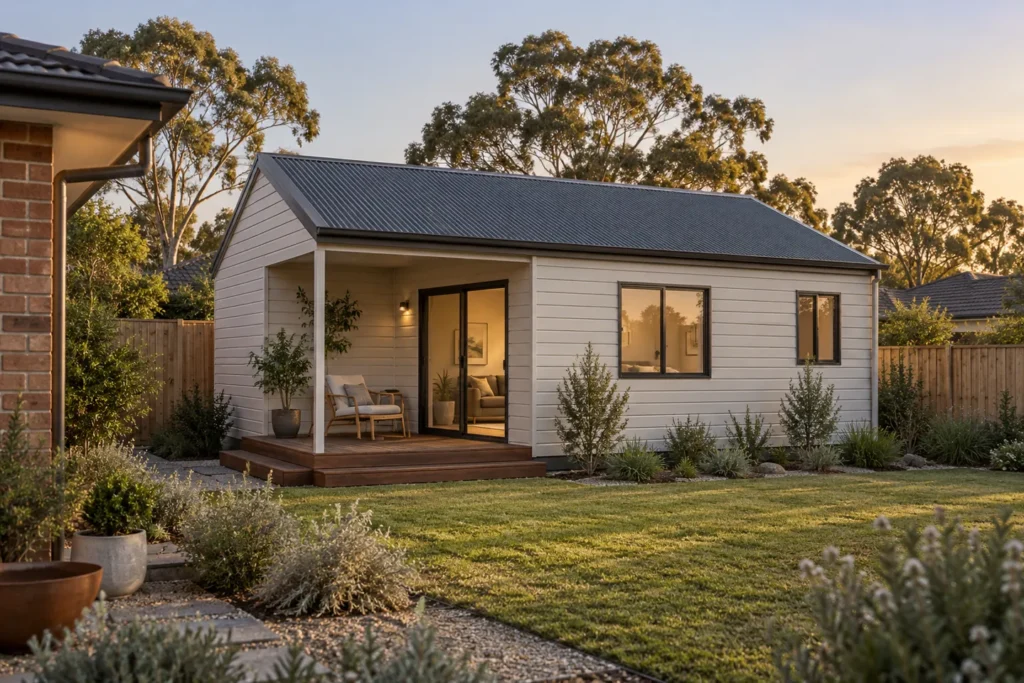
A Western Sydney 85sqm granny flat proposal must first meet the applicable land and planning conditions. The larger figure in the airport announcement doesn’t guarantee that an 85-square-metre design fits your particular site.
The NSW Government announcement of 19 May 2026 describes secondary dwellings up to 85 square metres on eligible ANEC 20–25 land, with aircraft noise attenuation. It names parts of Wollondilly, Camden, Fairfield, Liverpool and Penrith. This is targeted permission, not an approval for every property in those council areas.
Check the usable building envelope
Ask the designer to plot the proposal against the property’s applicable controls and existing buildings. Maximum permitted floor area and the space available after site constraints are different questions.
Confirm how area is measured for the relevant provision. Don’t compare a supplier’s internal living-area figure with an approval limit until the practitioner has checked that both use the same definition.
Use additional space deliberately
Start with the intended occupants. A second bedroom, accessible bathroom, storage or a separate work area can compete for the same floor space. Draw furniture and circulation before deciding that a larger advertised footprint solves the layout.
Our floor-plan guide helps you compare those choices. Its concepts still need to be adapted to the property’s orientation, privacy and approval requirements.
Price the specification rather than a generic upgrade
The announcement requires aircraft noise attenuation. Ask for a design-specific acoustic response and have the supplier price that scope. A line labelled “double-glazing upgrade” doesn’t explain the performance of the complete building.
Coordinate ventilation and thermal performance with the acoustic design. Record any dependency between products so that changing a window, vent or wall system triggers the appropriate review before purchase.
Use our quote comparison guide to separate the dwelling price from reports, foundations, connections and external work. Don’t rely on an unsupported regional average to cover unquoted requirements.
Keep the final inclusion schedule with the acoustic and energy documents so each quoted product can be traced back to the design.
Questions to resolve before proceeding
Does the announcement approve my design?
No. Obtain advice on the current rules and the proposed building for your property. The announcement explains the policy change; it isn’t a site approval or a construction specification.
Where should I start?
Read our NSW approval overview, then take your address, title details and project brief to the relevant practitioner. Ask for the source and date of the rules used in their assessment.
By The Granny Flat Guide Team. Last updated October 2026. About our research · Project budget calculator
Primary sources
These cards are an editorial summary of official pages. The Granny Flat Guide is not a certifier, council or licensed builder. Check the live official URL before you lodge or sign.
- Your Home (Australian Government)Your Home: Australia's guide to environmentally sustainable homes
- Australian Building Codes BoardNational Construction Code
See our editorial standards for how we research and update guides.