Skip to content

Granny Flat No Council Approval What You Need to Know in Australia 2026

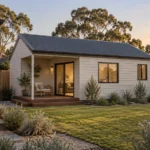
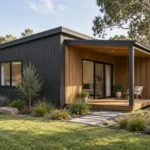
Australian backyard secondary dwelling photo

Granny Flat No Council Approval: What You Need to Know in Australia (2026)

Homeowners hear “granny flat no council approval” and picture a skip-the-paperwork build. In Australia, many lots now skip the long planning permit, but that is not the same as skipping every approval.

Compact white cottage with red trim behind a white picket fence

But “no council approval” rarely means no approval at all. It usually refers to bypassing the lengthy “planning permit” or “development application” (DA) stage. A building permit, which ensures the structure is safe and compliant with the National Construction Code (NCC), is almost always still required.

This 2026 guide explains what “no council approval” really means for granny flats across Australia. We’ll outline the fast-track approval pathways, state-specific exemptions, and the essential steps you still need to take to build legally and safely. If you skip the building permit, you don’t have an insurable dwelling. You can’t advertise a rental on an uncertified box. That’s the expensive shortcut.

The Golden Rule: While you can avoid a lengthy planning process, a certified building permit is almost always essential for a legal, safe, and insurable granny flat.


“No Council Approval” – The Reality in 2026

This term “no council approval” for granny flats commonly refers to projects that qualify for a faster, simpler approval process, avoiding the need for a full Development Application (DA) to your local council. This is commonly achieved through state-led policies that grant automatic approval if certain criteria are met.

Complying Development Certificates (CDC) – NSW

New South Wales is a prime example where many granny flats can be approved via a Complying Development Certificate (CDC). A CDC is a fast-tracked process issued by a private certifier (or council) in as little as 10–20 days. To qualify, your granny flat must strictly meet state-wide criteria regarding lot size, setbacks, maximum height, and floor area.

Victorian Exemptions (from early 2026)

From early 2026, Victoria will streamline approvals. Small second homes (granny flats) up to 60sqm will usually no longer require a planning permit in most cases, provided the property is not subject to specific environmental or other planning overlays. A building permit remains mandatory.

Western Australian Reforms (from April 2024)

Western Australia removed the requirement for planning approval for compliant granny flats up to 70sqm in April 2024. The previous minimum lot size requirements were also scrapped, making it easier to build. A building permit is still required, but the overall process is much faster.

Queensland’s “Accepted Development”

In Queensland, many granny flats can be classified as “Accepted Development” if they meet specific criteria (e.g., maximum size, proximity to the main house). This means you can not need a separate planning permit, but a building permit from a private certifier is always required.


The Mandatory Building Permit

Even if your granny flat project falls under a “no planning permit required” category, a **building permit (or Building Approval)** is almost universally mandatory across all Australian states. This permit ensures:

  • The granny flat complies with the National Construction Code (NCC).
  • It meets structural integrity, fire safety, health, and amenity standards.
  • It is safe for occupation.
  • It is insurable.

A private certifier or your local council commonly issues building permits. Proceeding without one is illegal, unsafe, and can lead to significant penalties, difficulty selling your property, and insurance complications.


When You Still Need Full Council Approval (DA)

There are several scenarios where a full Development Application (DA) to your local council will still be required, even with streamlined state policies:

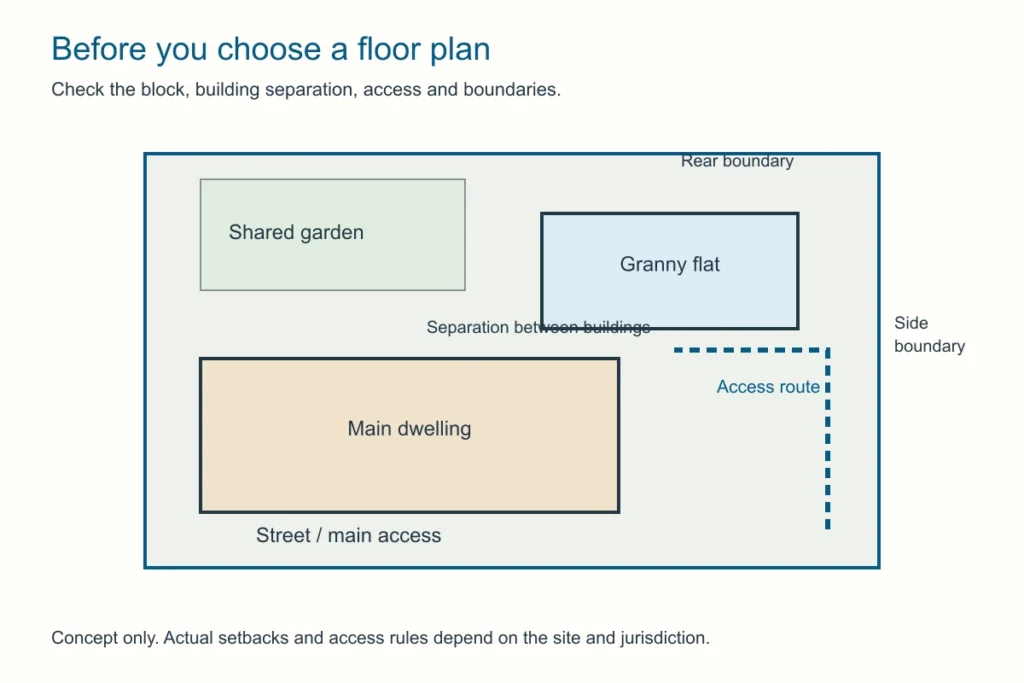
  • If your property or design does not strictly meet all the criteria for a CDC or state-based exemption (e.g., unusual setbacks, non-standard size).
  • If your property is in an environmentally sensitive area, heritage overlay, or on bushfire-prone or flood-prone land.
  • If you are proposing a two storey granny flat, which can have additional planning considerations.
  • If you want to deviate from standard designs or materials.

While a DA is a longer and more complex process, it allows for greater flexibility in design and siting, subject to council’s discretion.


What You Can’t Do Without Approval

Regardless of simplified pathways, you cannot legally:
  • Build a granny flat without a building permit.
  • Occupancy or rent out a granny flat until an Occupation Certificate is issued.
  • Subdivide your property to sell the granny flat separately from the main house.

Attempting to bypass these essential approvals can lead to fines, demolition orders, and make your property uninsurable and hard to sell. Always seek professional advice.


Getting Professional Advice is Key

That with simplified regulations, navigating the approval process can be complex. Engaging qualified professionals is highly recommended:

  • Granny Flat Builder: Many builders specialise in granny flats and can advise on feasibility, design, and manage the approval process for you.
  • Private Certifier: For CDC approvals, a private certifier is essential.
  • Architect/Draftsperson: For custom designs or DA applications.
  • Planning Consultant: For complex sites or DA applications.

These professionals can confirm the specific requirements for your property and ensure your project complies with all relevant legislation. For more general information on building, see our granny flat construction guide.


Frequently Asked Questions (FAQ)

Can I really build a granny flat without *any* approval?

No. While you can avoid a lengthy “planning permit” or “development application” process in some states (like NSW, VIC, WA, QLD), a building permit (or Building Approval) is almost always legally required to ensure the structure is safe, compliant, and insurable. “No council approval” commonly refers to the planning stage, not the building stage.

What happens if I build a granny flat without a permit?

Building without the necessary permits is illegal and can lead to serious penalties, including fines, orders to stop work, or even demolition orders. It will also make your granny flat uninsurable and very hard to sell your property in the future.

Is a tiny house the same as a granny flat for approval purposes?

No, not usually. A granny flat is a permanent, fixed dwelling subject to specific building codes. Tiny houses, especially those on wheels, are commonly classified as caravans and have different regulatory statuses regarding permanent occupation. See our guide on granny flat vs tiny house.

How can I find out my specific council’s requirements?

The fastest check is your local council website: planning or building pages usually publish fact sheets on secondary dwellings. A local builder or planning consultant can interpret overlays if the PDF is unclear.


Conclusion: Build Smart, Build Legally

The dream of building a granny flat with “no council approval” is becoming a reality in Australia, with many states streamlining the planning process. The catch: avoiding a planning permit is not the same as bypassing all approvals.

When building permit is a non-negotiable step to ensure your granny flat is safe, legal, and adds value to your property. By understanding the fast-track pathways available in your state and working with qualified professionals, you can work through the process efficiently and confidently, turning your backyard dream into a compliant and valuable asset.

Sources: See also www.abcb.gov.au for baseline Australian guidance.
By The Granny Flat Guide Team

How much does council approval add to your build budget?

Council and certifier fees sit outside the builder quote. In NSW, a CDC pathway through a private certifier often lands between roughly $3,000 and $8,000 once survey, BASIX and Sydney Water checks are included, while a full DA can cost more because of longer consultant time and holding costs. Victoria and Queensland use different fee schedules, so treat any single number as a starting point. Model your own project in our cost calculator, then compare supplier quotes through get a quote when your footprint is settled.

What design choices affect approval speed?

Setbacks, height, floor area and tree protection overlays decide whether you stay on a fast CDC track or drop to a slower DA. Staying under common 60 sqm internal caps, keeping adequate side and rear setbacks and connecting services without major easement conflicts usually keeps the pathway simpler. If your block is sloped, flood-affected or heritage-listed, expect extra reports before council or your certifier can sign off. Use the setback checker and approval wizard against your address before you pay for custom drawings.

Primary sources

These cards are an editorial summary of official pages. The Granny Flat Guide is not a certifier, council or licensed builder. Check the live official URL before you lodge or sign.

  • Your Home (Australian Government)Your Home: Australia's guide to environmentally sustainable homesJurisdiction: Australia · Effective: Living resource (check current page) · Checked on: 2026-09-02 · Layer: editorial summary
  • Australian Building Codes BoardNational Construction CodeJurisdiction: Australia · Effective: NCC 2022 (confirm current edition) · Checked on: 2026-09-02 · Layer: building approval
  • NSW Planning PortalState Environmental Planning Policy (Housing) 2021Jurisdiction: NSW · Effective: 2021 consolidation (confirm current) · Checked on: 2026-09-02 · Layer: planning approval
  • Victorian Building AuthorityBuilding Act 1993 / small second dwelling settingsJurisdiction: Victoria · Effective: Confirm current VBA guidance · Checked on: 2026-09-02 · Layer: building approval
  • Queensland PlanningPlanning Act 2016Jurisdiction: Queensland · Effective: Confirm current QLD planning page · Checked on: 2026-09-02 · Layer: planning approval
  • WA Planning (DPLH)Planning and Development Act 2005Jurisdiction: Western Australia · Effective: Confirm current DPLH page · Checked on: 2026-09-02 · Layer: planning approval
  • PlanSA (South Australia)Planning, Development and Infrastructure Act 2016Jurisdiction: South Australia · Effective: Confirm current PlanSA page · Checked on: 2026-09-02 · Layer: planning approval
  • QBCC (Queensland)Queensland Building and Construction Commission licensingJurisdiction: Queensland · Effective: Confirm current QBCC page · Checked on: 2026-09-02 · Layer: building approval
See our editorial standards for how we research and update guides.
About The Granny Flat Guide

Independent Australian research on secondary dwellings and backyard housing. We publish cost guides, council rules and supplier reviews. We are not a builder. See our editorial standards.


Work Out Your Real Budget

Use our free on-page cost calculator to estimate preliminaries, site costs, the build and finishes. Results update instantly in your browser.

Open the Cost Calculator

Planning tools

Approval wizard, setback checker and build-type comparator in one place.

Open planning tools

Compare supplier quotes

Get matched with up to three vetted builders or kit suppliers for your site and budget.

Get a quote

Lot checkPathwayCertifierLodgeCDC, DA and building approval are separate layers. Confirm in your jurisdiction.
Non-construction concept: planning approval, building approval and lodgement are separate steps.