Granny Flat Rules NSW 2026 CDC vs DA Pathway Explained
Granny flat rules NSW in 2026 still split CDC from DA, with a typical 60 m² cap on lots of at least 450 m² in residential zones.
Last updated September 2026. This page is the NSW rules and numbers guide: Housing SEPP caps, setbacks and the CDC vs DA comparison table. For lodgement steps, fee buckets and inspections, use granny flat approval NSW. National decision tree: approval process Australia.
If your design meets every Housing SEPP standard, you can use a Complying Development Certificate (CDC). Non-compliant sites need a Development Application (DA). Rules are set by state policy and your local council. This guide summarises the usual pathway; it isn’t legal advice. Cross-check figures with the NSW Planning Portal and your certifier before you lodge. There is no refund if you lodge CDC and the certifier sends you to DA.
NSW secondary dwelling rules in brief
New South Wales uses the Housing SEPP to standardise secondary dwelling rules statewide. That keeps key numbers consistent across Sydney, Newcastle and regional NSW.
The two approval routes sit on top of those numbers: CDC for projects that tick every box, DA when something doesn’t fit.
| Rule | Typical CDC standard |
|---|---|
| Maximum internal floor area | 60 m² (verandas and garages extra) |
| Minimum lot size | 450 m² |
| Zoning | R1, R2, R3, R4 or R5 |
| Maximum height | 8.5 m |
| Rental | Permitted to any tenant |
Process and fee walkthrough: NSW approval guide.
CDC vs DA: which pathway fits your block?
| Factor | CDC | DA |
|---|---|---|
| Typical timeframe | About 10–20 days | Commonly 2–4+ months |
| Assessor | Private certifier or council CDC team | Local council planning department |
| Design flexibility | Must meet every SEPP number exactly | Council can consider variations |
| Best when | Standard 60 m² design on a typical suburban lot | Heritage area, flood land, bushfire BAL, or non-standard layout |
If one rule fails, the whole project drops to DA. That’s why feasibility checks happen before you pay for custom drawings.
Bring your lot size, zone and a rough footprint sketch to the first certifier call. Ten minutes with those numbers beats a week of emails arguing about a plan that never fitted CDC.
Setbacks and site layout
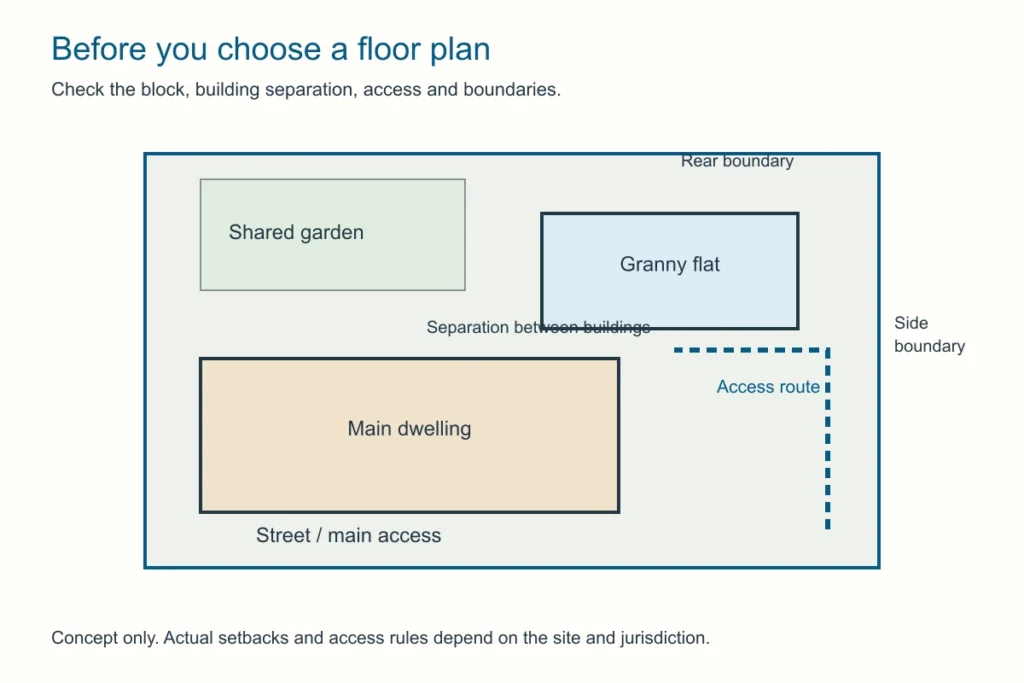
CDC projects must respect minimum rear, side and tree setbacks defined in the Housing SEPP and your certifier’s checklist. Common expectations include:
- About 3 m to the rear boundary
- About 0.9 m to side boundaries (subject to fire rules)
- Connection to the main dwelling via driveway or path
- One secondary dwelling only per lot
Carports and covered outdoor areas can sit outside the 60 m² cap if designed correctly. Confirm the exact treatment with your certifier early. More detail: NSW setbacks guide.
When a DA is unavoidable
Expect the slower DA route if your land is in a heritage conservation area, flood planning area, or high bushfire risk zone that blocks CDC. Steep blocks, oversized designs or lot sizes under 450 m² also push you toward DA.
A DA costs more in consultant fees and holding costs, but it can approve designs that a strict CDC can’t. Budget extra months and allow for possible neighbour notification.
Before you abandon CDC, ask a certifier whether a small redesign would bring the project back into SEPP numbers. Shaving floor area, shifting a wall to clear a setback, or dropping a covered outdoor area from the internal count can save months. If overlays still block CDC, treat the DA fee quote as a real line item in your build budget, not a surprise.
Costs beyond the build
Approval fees sit on top of construction. For CDC you will commonly pay certifier fees, a BASIX certificate, survey and possibly Sydney Water approval. DA adds council application charges and sometimes longer consultant time.
Fee buckets and lodgement order: NSW approval. Broader bands: Australia-wide cost guide and the cost calculator.
Also budget holding costs if you are bridging finance while waiting on DA. Two to four months of interest and rent elsewhere can dwarf the council fee itself. Keep a contingency of at least 10% for site reports the planner requests after lodgement.
Energy and NCC compliance
All new NSW secondary dwellings must meet current NCC energy provisions, including the 7-star NatHERS pathway where applicable. That affects glazing, insulation and HVAC choices, and it can change window sizes you sketched for a sunny living room.
Read NCC 7-star energy rules for a plain-language summary. Ask your designer to model orientation early. Fixing a failed energy rating after drawings are finished is slower and more expensive than adjusting the plan once. BASIX also ties water and thermal targets into the same package for many NSW lodgements: NSW BASIX requirements.
Next step: prove the numbers on your lot
- Check lot size, zone and overlays on the NSW Planning Portal.
- Ask a certifier whether your concept qualifies for CDC.
- Commission plans that match either CDC or DA requirements from day one.
- Follow the lodgement sequence on NSW approval.
- Obtain an Occupation Certificate before renting.
Check your lot against state caps with the approval pathway wizard and setback checker before you commission plans. Don’t pay a full custom drawing set until you know which pathway you’re on.
State rules hub
NSW numbers above do not apply in other states. Victoria uses small second dwelling rules, Queensland often uses code assessment, and WA follows R-Codes size caps. Use these links when your block is interstate or you are comparing projects across borders.
- All states comparison table
- National regulations guide
- NSW cost guide
- Victoria
- Queensland / Brisbane
- Western Australia
- South Australia
- Tasmania
Frequently Asked Questions
What is the maximum secondary dwelling size in NSW?
The internal living area is capped at 60 m² under standard secondary dwelling rules. Covered outdoor areas and garages can be additional if they meet SEPP definitions.
Can I build on a lot smaller than 450sqm?
CDC usually requires at least 450 m². Smaller lots can still support a secondary dwelling through a DA if council supports it under local controls.
How fast is CDC approval in NSW?
Many certifiers turn around complete CDC applications in about 10–20 business days. Incomplete paperwork is the most common delay.
Can I rent my NSW secondary dwelling on Airbnb or to unrelated tenants?
Yes, subject to council short-term rental rules in some LGAs and strata-style estate covenants if they exist on your title.
Do I need both CDC and a separate construction certificate?
No. A CDC combines planning and construction approval. A DA requires a separate Construction Certificate before building starts.
Published by The Granny Flat Guide. Confirm current SEPP clauses with your certifier before lodging.
By The Granny Flat Guide Team
Primary sources
These cards are an editorial summary of official pages. The Granny Flat Guide is not a certifier, council or licensed builder. Check the live official URL before you lodge or sign.
- Your Home (Australian Government)Your Home: Australia's guide to environmentally sustainable homes
- Australian Building Codes BoardNational Construction Code
- NSW Planning PortalState Environmental Planning Policy (Housing) 2021
See our editorial standards for how we research and update guides.
Related guides