Granny Flat Approval Process: Separate Planning and Building Decisions
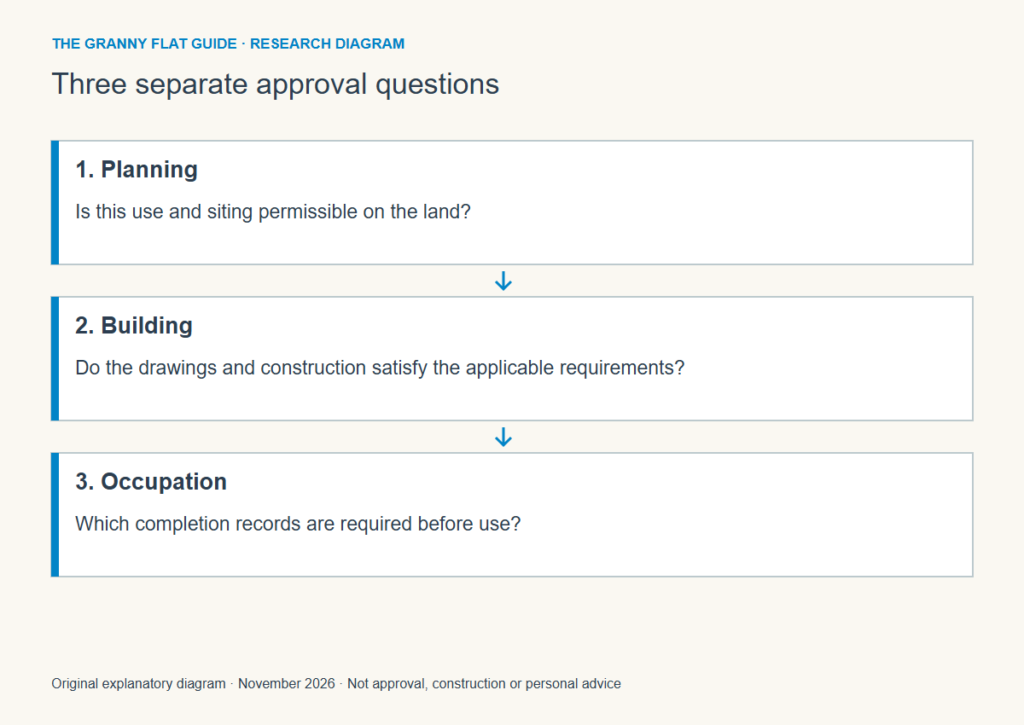
The granny flat approval process in Australia requires you to resolve planning and building requirements for the specific property. This guide uses NSW’s CDC and DA routes to explain the decisions, then points to the different state frameworks. Some proposals are exempt from a separate planning application; that does not establish a building exemption.
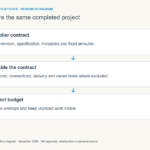
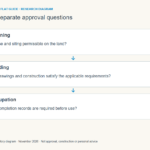
The approval checklist organises the project documents; the state comparison identifies the separate frameworks.
This is research guidance, not certification or legal advice. Confirm with your private certifier and council.
Two layers to check
Scroll the table sideways to read every column. With the table focused, use the left and right arrow keys.
| Layer | Question it answers | Typical actor |
|---|---|---|
| Planning / development | Is a secondary dwelling allowed on this lot under these controls? | Council and/or private certifier (CDC) |
| Building / construction | Do the plans meet NCC and related standards? | Building surveyor / certifier; energy assessor |
Check both layers, even where a planning exemption applies. Ask for the legal basis of the exemption and the documents still required. Our approval-exemption guide explains the questions to ask.
NSW example: CDC or DA?
For a NSW proposal, have the responsible practitioner work through these questions:
- Is a secondary dwelling permitted on this zoning and lot type at all? If no, stop or redesign; don’t force a CDC.
- Does the design fit numeric code standards? Size cap, setbacks, height, site coverage, landscaping area, parking, bushfire/flood overlays as applicable.
- If yes on all ticks: complying / CDC-style pathway with a registered certifier may be available (NSW Housing SEPP CDC is the textbook example). See NSW CDC vs DA and NSW approval steps.
- If any standard fails, or overlays trigger discretion: check whether a permissible DA alternative exists; otherwise redesign or reconsider the project.
- After planning consent: obtain building approval / construction certificate and satisfy NCC energy and condensation requirements. NCC context: NCC 2022 changes.
Official NSW lodgement sits on the NSW Planning Portal. National construction rules: NCC online via the ABCB.
When CDC-style pathways usually fail
- Floor area or its measurement does not satisfy the applicable provision
- Setbacks or height that breach the code table
- Heritage, flood, bushfire or other overlays that push you out of complying development
- Torrens vs strata complications, dual occupancy conflicts, or easements through the building envelope
- Trying to use a brochure kit plan that was never checked against your lot
Kits and prefab still need site-specific approval: DIY kits hub, prefab directory, approval guide.
Documents you should expect to assemble
- Site plan with setbacks, levels and services
- Floor plans, elevations and sections
- BASIX (NSW) or NatHERS / energy certificates as required
- Stormwater and driveway notes where triggered
- Bushfire or flood reports if mapped
- Owner consent and title details
Ask the certifier for the required documents and acceptable survey information before lodging. Check that the plans and supporting reports use the same revision. Record the associated fees in the cost breakdown.
Private certifier vs council: who does what
In NSW, council or a registered certifier may assess an eligible CDC. A DA follows the relevant consent-authority process, with construction approval and certification handled separately. Check the practitioner’s registration and scope, ask who manages the application and inspections, and keep responsibilities in writing.
State name cheat-sheet
- NSW: CDC vs DA under Housing SEPP / EPI controls
- VIC: small second dwelling provisions, planning exemptions and building permits; see VIC rules
- QLD: accepted development vs assessable; QLD rules
- WA: ancillary dwellings under R-Codes with local planning scheme overlays
Always read the current instrument for your lot. Planning portals: planning.vic.gov.au, planning.qld.gov.au. If you’re comparing two states because you own land in both, don’t reuse one drawing pack. Floor-area definitions, size limits and setbacks all need a fresh check.
Next step: confirm the route for your property
Check zoning and overlays, then ask the responsible practitioner which planning and building route applies. In NSW, that includes checking whether the proposal is eligible for a CDC. Use the approval wizard for a first pass, then the national approval guide for the document checklist. NSW owners: rules numbers first, NSW steps and fees second.

Frequently Asked Questions
Can I start building while the DA is lodged?
Do not. Wait for the required planning and building approvals. Starting early risks stop-work orders and wasted foundations.
Is CDC always faster than DA?
CDC and DA assess different proposals. Ask about the expected schedule for a complete application and what could require redesign; a generic timeline is not a commitment for your property.
Does approval mean I can rent the granny flat?
Planning approval is not the same as tenancy compliance. See granny flat rental law.
Do prefab units skip approval?
No. Factory build quality still needs site planning and building compliance. Prefab certification.
Where do I get quotes after pathway choice?
Browse supplier directories from the guides hub and the supplier hub, or send us an enquiry if you need a research pointer first.
Disclaimer: The Granny Flat Guide Team provides research content, not building certification or legal advice.
Sources: NSW Planning Portal · ABCB · National Construction Code · Victorian planning · Queensland planning
By The Granny Flat Guide Team. Reviewed 2 November 2026. About · Send an enquiry